

Bonus Blitz casino Plinko
Introduction
Plinko is one of those casino formats that looks almost too simple to deserve serious attention. A ball drops from the top of the board, bounces through a field of pins, and lands in a payout slot at the bottom. That is the whole visual idea. Yet in practice, Bonus Blitz Casino bonus details before claiming bonuses or depositing blitz casino Plinko creates a very specific kind of tension that many players do not get from standard reel-based titles.
I have seen this pattern many times when reviewing modern casino content for the Australian market: the simpler the interface, the easier it is to underestimate the real playing experience. Plinko is a good example. On the surface, it feels light, quick and intuitive. Underneath that clean design, however, sits a risk model that can swing from calm and repetitive to sharp and highly uneven depending on the settings chosen before the drop.
That is exactly why this game deserves a closer look. A player who opens Bonus blitz casino expecting a casual, low-effort distraction may find a surprisingly tense session if the risk level is pushed higher. On the other hand, someone who understands how the board, multipliers and drop distribution work can use Plinko much more deliberately. This article is focused on that practical side: what Plinko really is, how its logic works, what its strengths and limitations are, and what a player should understand before deciding whether it fits their style.
What Plinko is and why it attracts so much attention
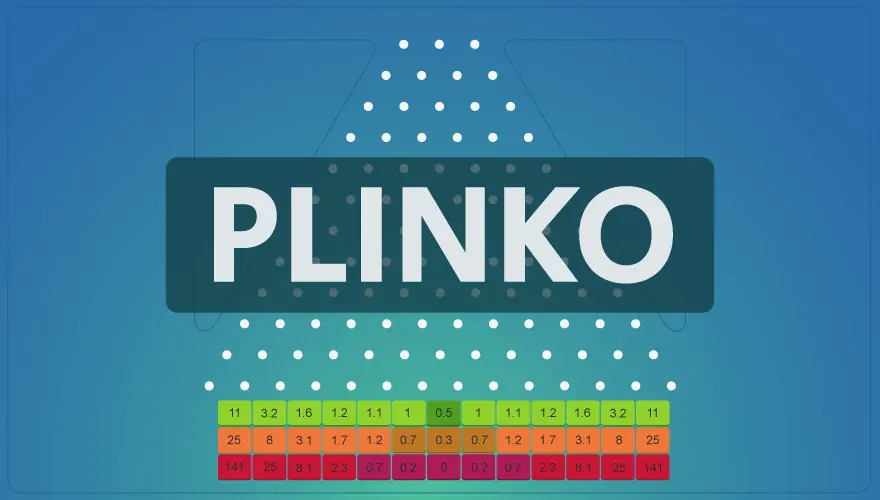
At its core, Plinko is a probability-driven drop game. The player chooses a stake, often selects the number of rows and the level of risk, then releases a ball from the top of the board. As the ball hits pegs on the way down, it shifts left or right until it lands in one of several payout zones. Each zone carries a multiplier. Most of the middle slots usually pay small returns, while the outer edges can hold the highest multipliers.
The reason Plinko stands out is not just that it is easy to understand. It is that the game turns randomness into something visible. In many games for Australian players, the random result is hidden behind spinning reels, card distribution or abstract number generation. In Plinko, the uncertainty unfolds in front of the player second by second. You can watch the path develop, react to near-misses, and feel the difference between a central landing and a late bounce toward an edge multiplier.
That visibility matters more than many players expect. It creates a stronger sense of involvement, even though the underlying outcome is still governed by random number generation. One of the most memorable things about Plinko is this contrast: the drop looks physical and almost skill-like, but the result is still determined by chance. That illusion of “almost influencing” the path is part of why the format has become so noticeable across casino platforms.
On Bonus blitz casino, the appeal of Plinko is also tied to session speed. There is no waiting for long bonus rounds or layered symbol animations. A round begins immediately, resolves quickly, and invites another decision just as fast. For some players, that direct loop is more engaging than a slot with a richer visual package but slower feedback.
How the Plinko board actually works in practice
To understand whether Plinko is worth trying, it helps to separate the visual layer from the mathematical one. The board is made of rows of pegs. When the ball hits a peg, it deflects to one side. Repeated over many rows, these small changes produce a final landing point. The key detail is that the board is not “fair” in the everyday sense of every slot being equally likely. Central outcomes are usually far more common than edge outcomes.
That shape resembles a probability distribution. The middle is dense with likely landings, while the far-left and far-right pockets are much rarer. This is why the highest multipliers are often placed at the edges: they compensate for low hit frequency. It also explains why many sessions can feel flat for long stretches and then suddenly spike.
In most Plinko versions, including the style commonly seen at Bonusblitz casino, the player can adjust several inputs before dropping the ball:
- Bet size — determines the value of the result.
- Risk level — usually low, medium or high, affecting multiplier spread.
- Rows — changes board depth and often alters the payout profile.
These settings matter because they reshape the experience more than many players expect. A low-risk board tends to compress outcomes. You may see more frequent modest returns and fewer extreme swings. A high-risk board does the opposite: many drops may end in weak or losing results, but the top-end multiplier becomes more meaningful. In other words, the same Plinko interface can behave like two very different casino products depending on configuration.
| Setting | What it changes | What it means for the player |
|---|---|---|
| Low risk | Tighter multiplier distribution | More stable rhythm, lower ceiling, fewer sharp swings |
| Medium risk | Balanced spread between central and edge values | Mixed session profile, moderate tension, broader range of outcomes |
| High risk | Large gap between common and rare payouts | Longer dry spells possible, but stronger upside on rare edge hits |
| More rows | Longer path and different landing distribution | Can increase suspense and change how often top multipliers appear |
A detail that often gets overlooked is that Plinko does not become more strategic simply because the player can choose a drop point or adjust settings. Those decisions shape exposure, not control. That distinction is important. You are selecting a payout model, not steering the ball.
Why the game feels engaging even when the rules are minimal
Plinko keeps attention through rhythm rather than narrative. It does not rely on characters, expanding symbols or multi-stage bonus sequences. Instead, it creates interest through repetition with variation. Every drop follows the same basic route, but the path never looks identical. That tiny visual uncertainty is enough to keep the brain engaged.
In practical terms, the game’s tempo is one of its strongest hooks. A round resolves quickly, but not instantly. There is just enough delay during the fall to create anticipation. That timing is clever. If the result appeared immediately, the experience would feel mechanical. If it took too long, the simplicity of the format would start to work against it. Plinko sits in a narrow middle ground where each drop is brief, yet still suspenseful.
I would highlight one observation that often gets missed in generic reviews: Plinko is not exciting because something complex happens; it is exciting because the same simple event keeps producing emotionally different outcomes. A central low multiplier after three seconds feels completely different from a late edge bounce into a rare top slot, even though both rounds use the same board and the same rules.
That is also why some players can stay with the format longer than expected. The session does not need a bonus feature to “wake up” the experience. The board itself provides the emotional swings. For players who enjoy immediate feedback and visible randomness, this can be more satisfying than waiting for a slot to trigger a special round.
Risk profile, session volatility and who should take that seriously
Plinko can be deceptively sharp in terms of bankroll behaviour. Because the interface looks clean and almost arcade-like, some players approach it with less caution than they would bring to a high-variance slot. That is a mistake. The visual simplicity does not mean financial smoothness.
The real issue is distribution. Most boards are structured so that modest outcomes cluster near the centre, while standout multipliers sit in positions that are statistically harder to reach. If a player chooses a high-risk mode, they are effectively accepting that many drops may return very little before a bigger result appears, if it appears at all during that session.
For this reason, I see Plinko as a format that suits players who are comfortable with visible streakiness. It is not always about long losing runs in the strict sense; often it is about many low-value landings that fail to meaningfully offset the total outlay. A session can remain active and visually entertaining while still drifting downward.
Here is the practical way to think about it:
- Low-risk Plinko may suit players who want frequent movement and less severe result gaps.
- High-risk Plinko is more suitable for those who accept uneven sessions in exchange for stronger upside potential.
- Players who chase control may not enjoy Plinko at all, because the format offers choice without real influence over the drop path.
A second useful observation: Plinko often feels calmer than it really is because each round is visually small. There is no dramatic reel crash or loud feature trigger. Yet the bankroll can move quickly precisely because rounds are so fast and easy to repeat. This is one of the main reasons discipline matters here.
What players need to understand about probabilities and likely outcomes
One of the biggest misunderstandings around Plinko is the idea that a ball “looks due” to hit a better slot after a sequence of weak landings. That is not how the game works. Each drop is an independent event shaped by the game’s random logic and payout structure. Previous rounds do not build pressure toward a stronger result.
What players are really noticing is variance. On a high-risk board, the gap between common and rare outcomes is wide enough that sessions can feel unfairly cold, then suddenly generous. That swing is not evidence of a pattern forming. It is simply the expected behaviour of a broad distribution with low-frequency peak results.
The practical takeaway is straightforward: do not interpret short-term sequences as signals. If you are playing Plinko at Bonus blitz casino, treat each drop as a fresh event and choose settings based on what kind of session you can tolerate, not on what you think the board “owes” you.
The table below sums up how probabilities tend to feel from the player’s side.
| Session element | What often happens | How it feels in real play |
|---|---|---|
| Central landings | Appear relatively often | Steady but sometimes underwhelming |
| Edge multipliers | Appear rarely | High tension, memorable when they hit |
| High-risk mode | Produces wider result spread | More dramatic sessions, less predictability |
| Fast repeat play | Increases round count quickly | Can accelerate bankroll use without feeling heavy |
This is where RTP discussions should be handled carefully. Even if a Plinko variant has a stated return-to-player percentage in line with other casino products, the lived experience can feel very different because the path to that theoretical return is more visibly uneven. A player does not experience RTP as a number. They experience it as a sequence of drops, misses, near-misses and occasional spikes.
How Plinko differs from slots and other casino formats
The cleanest comparison is with classic online slots. In a slot, the player spins reels and waits for symbol combinations, paylines or cluster logic to resolve. The entertainment often comes from layered design: themes, sounds, special symbols, free spins checklist and bonus rounds. In Plinko, almost all of that is stripped away. The core event is a single falling object and a final multiplier.
That difference changes the psychology of play. Slots often create delayed excitement. You may spend a long stretch waiting for a feature trigger that changes the session. Plinko front-loads the tension into every round. There is no need to “unlock” the interesting part. The drop itself is the interesting part.
Compared with table games, Plinko also occupies a distinct space. It lacks the strategic depth associated with blackjack or certain poker overview variants, and it does not offer the social or pacing qualities of roulette in a live setting. But it also avoids the complexity that can discourage casual players. It asks for almost no learning time while still producing a strong emotional rhythm.
That makes Plinko unusual. It is simpler than most slots in structure, but often more transparent in how chance is perceived. You can literally watch randomness unfold. For some players, that feels more honest. For others, it quickly becomes repetitive because there is no wider game world around the mechanic.
If I had to summarise the difference in one line, it would be this: slots are usually built around event variety, while Plinko is built around outcome tension.
Practical strengths and limitations of Bonus blitz casino Plinko
Any serious review of Bonus blitz casino Plinko should move beyond the usual “easy to play” description. Ease of entry is real, but it is only one part of the picture. The stronger question is what the format does well over an actual session and where it starts to show its limits.
Its strongest qualities are clear:
- Immediate clarity — a new player understands the basic loop almost instantly.
- Fast feedback — each decision resolves quickly, which suits short sessions.
- Visible randomness — the drop path creates more emotional involvement than a hidden instant result.
- Configurable experience — changing rows and risk can noticeably alter session character.
At the same time, there are real limitations:
- Limited depth — players who need evolving features or layered progression may lose interest.
- Potential for fast spend — the pace can encourage more rounds than intended.
- Illusion of influence — visual movement may tempt players to believe they can read the board.
- High-risk settings can feel harsher than expected — especially for those coming from lower-volatility slot play.
One more observation worth keeping: Plinko is often at its best in controlled sessions. It works well when a player knows what kind of experience they want from it. It becomes less satisfying when used as a vague “maybe something big will happen” format, because that mindset tends to exaggerate frustration during ordinary distributions.
What to check before launching a Plinko session
Before starting Plinko, I recommend looking at a few practical points rather than jumping straight into repeated drops. This matters because the game can change character significantly based on settings that take only seconds to choose.
First, check the available risk level. This is not a cosmetic option. It is the main dial that determines whether the session is likely to feel steady or jagged. Second, review the row count if the version allows it. More rows can change the shape of the payout map and the emotional tempo of each drop. Third, decide on a stake size that matches the speed of the format. A bet that feels harmless in a slow slot may behave differently in a game where rounds resolve almost instantly.
It is also worth using demo mode when available, not because it predicts future results, but because it helps you feel the rhythm of the board. Plinko is one of those formats where understanding the pace is almost as important as understanding the rules. A short demo session can reveal whether the game’s repetition feels satisfying or whether it starts to feel thin after a few minutes.
If you are playing at Bonus blitz casino, the most useful mindset is to treat Plinko as a specialised format rather than a universal one. It is not trying to replace slots, roulette review or blackjack. It is offering a specific blend of speed, visibility and variance. The better your expectations match that reality, the better the experience tends to be.
Final verdict on Bonus blitz casino Plinko
For players new to Plinko, starting with the lowest bet size available lets you observe the ball’s landing distribution across the multiplier rows without risking meaningful bankroll, since the house edge typically sits in a modest single-digit range for most operators. A practical habit is to set a session loss limit equal to one deposit amount before you begin, and to stop the moment that figure is reached, which keeps the fast pace of the game from encouraging chase behaviour. Checking the game’s volatility settings before playing matters, because a high-volatility board pays out less frequently but with larger multipliers, whereas a low-volatility setting delivers smaller, steadier returns that suit longer sessions. Many players also use the auto-play feature to cap the number of rounds at a fixed count, which provides a natural break point and prevents the rapid-fire rounds from blurring into an extended session.
Its main strengths are easy to define. The format is accessible, quick to understand, and capable of creating genuine suspense without relying on complicated presentation. The ability to adjust risk levels and, in some versions, row count gives players meaningful control over session style, even though it does not provide control over results. For players who enjoy visible randomness and short, direct rounds, that can be very appealing.
The caution points are just as important. Plinko can feel lighter than it really is, especially in high-risk mode. Fast repetition and broad result spread can put pressure on a bankroll more quickly than the relaxed interface suggests. It can also disappoint players who want narrative depth, interactive features or the sense that decisions carry strategic weight beyond choosing exposure.
So, is Plinko worth trying? In my view, yes — but only if the player understands what it truly offers. If you want a compact, high-clarity casino format where every round contains a visible moment of suspense, Plinko makes sense. If you prefer deeper structure, slower pacing or more strategic involvement, another format may suit you better. That is the honest appeal of Plinko at Bonusblitz casino: simple to enter, easy to misread, and much more dependent on risk settings than its straightforward design first suggests.
FAQ
How does Plinko work with ball drops and multipliers?
A ball is released from the top and bounces through the grid, landing in a results zone. Each zone corresponds to a multiplier that determines the round outcome based on the selected stake.
What risk level does Plinko involve and how is volatility reflected?
Plinko may show higher volatility because the ball can land in very different multiplier zones from the same starting point. The game is driven by randomness, so short sessions can swing quickly.
